Blog

October 2025 Horological Journal
3 October 2025

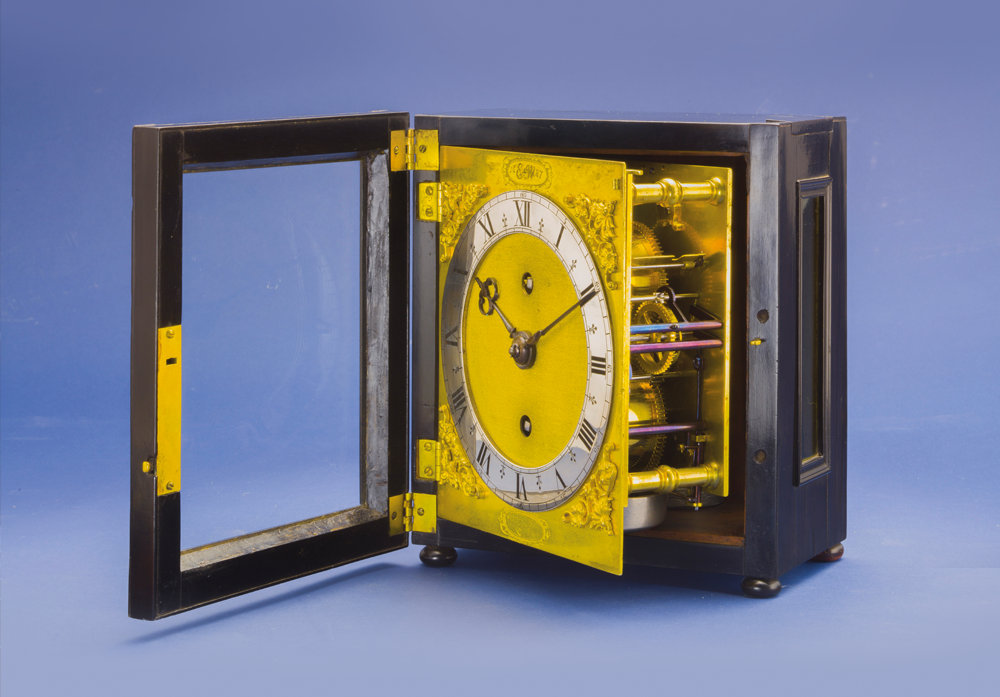
This month we feature one of the earliest pendulum clocks made in Britain – the Fromanteel Pendulum ‘Box Clock’ – on the covers. The clock has certainly had an interesting 20th century, which Justin Koullapis FBHI describes in his article.

Also in this issue, David Poole MBE FBHI continues his ‘Let’s make a clock’ series, and Stuart Malin and R. J. Dickens offer a new assessment of the calendar and zodiac graduations on the Antikythera Mechanism.

Click to read the article for free

Below is a list of the articles available in the October 2025 edition of the Horological Journal.

If you’re already a member we hope you enjoy them, if not sign up for membership and receive the Journal every month along with many more benefits.


Fromanteel Pendulum ‘Box Clock’, c.1659

Justin Koullapis FBHI


BHI Examinations Report 2025

Jeffrey O’Dowd FBHI BSc


A Helping Hand for Students 89

David Poole MBE FBHI


Bench View

Mike Flannery FBHI

Latest Articles

29 October 2026

November 2026 Horological Journal

November’s Journal features on the covers a silver and gilt pre-balance spring verge pocket watch made for King James VI of Scotland, later James I of England, circa 1613. One of only three known to be in existence, it was created by David Ramsay, who became the first Master of the Worshipful Company of Clockmakers. Also in this […]

Find out more

30 September 2026

October 2026 Horological Journal

The covers of the October edition of the HJ feature an intriguing table clock co-signed by East and Fromanteel, although the origins of its engraved case are the subject of deeper research. It is thought to be the first English full grande sonnerie clock, and one of the earliest English clocks fitted with a minute hand. Also in this issue, David Poole […]

Find out more
✨ INTRODUCTION TO FINISHINGHave you ever looked closely at the finish on a watch or clock component and wondered how it's achieved?What’s the difference between a high polish and a straight-grained finish? And how do you preserve those crisp, traditional edges without rounding them off?Our Introduction to Finishing course at Upton Hall explores the techniques behind traditional horological finishing, with plenty of hands-on practice.Working with brass and steel, you’ll try different polishing methods and discover traditional techniques including silvering, bluing and lacquering.No previous experience is needed, making this a great opportunity to explore a new skill and learn more about the details that make each component special.🔧 Have you ever tried finishing a component yourself? Which technique would you most like to learn?Find out more about our courses: bhi.co.uk/courses#BHI #Horology #Watchmaking #Clockmaking #HorologicalFinishing #WatchRepair #ClockRepair #UptonHall #WatchCollectors ...
View on Facebook (opens in a new tab)
✏️ Ever wondered how to read or create a technical drawing?Technical drawing is an important part of horology, but where do you start?Our Introduction to Technical Drawing – Part 1 course at Upton Hall is a great place to begin.What do different line types tell us? How do you show a component from different angles? And what makes a technical drawing clear and accurate?You'll explore the fundamentals of layout, lettering, dimensioning, sectioning and orthographic projection, with plenty of opportunity to put your new knowledge into practice and learn alongside fellow students.No previous experience is needed – just an interest in learning something new!Have you tried technical drawing before, or is it a skill you'd like to develop?Find out more about our courses: bhi.co.uk/cou#bhi/#britishhorologicalinstitutel#TechnicalDrawingc#horology #watchmakinga#clockmakingl#watchrepaira#horologicalskillsi#learnhorologyr#UptonHall##distancelearningceLearning ...
View on Facebook (opens in a new tab)
Getting to grips with single train clocks ⏱️What does it take to get a single train clock running as it should?On our four-day Single Train Clock – Servicing and Correcting Faults course at Upton Hall, students gain hands-on experience identifying faults, understanding what’s gone wrong and putting things right.With plenty of practical workshop time, the course helps students develop their clock servicing skills and prepare for the DLC Level 3 Exam – Unit D3 (Single Train Clock).Have you worked on a single train movement? We'd love to hear about your experiences!Find out more about the course here: bhi.co.uk/courses#BHI #Clockmaking #Horology #ClockRepair #ClockServicing #MechanicalClocks #ClockRestoration #UptonHall #HorologicalTraining ...
View on Facebook (opens in a new tab)
To top