Blog

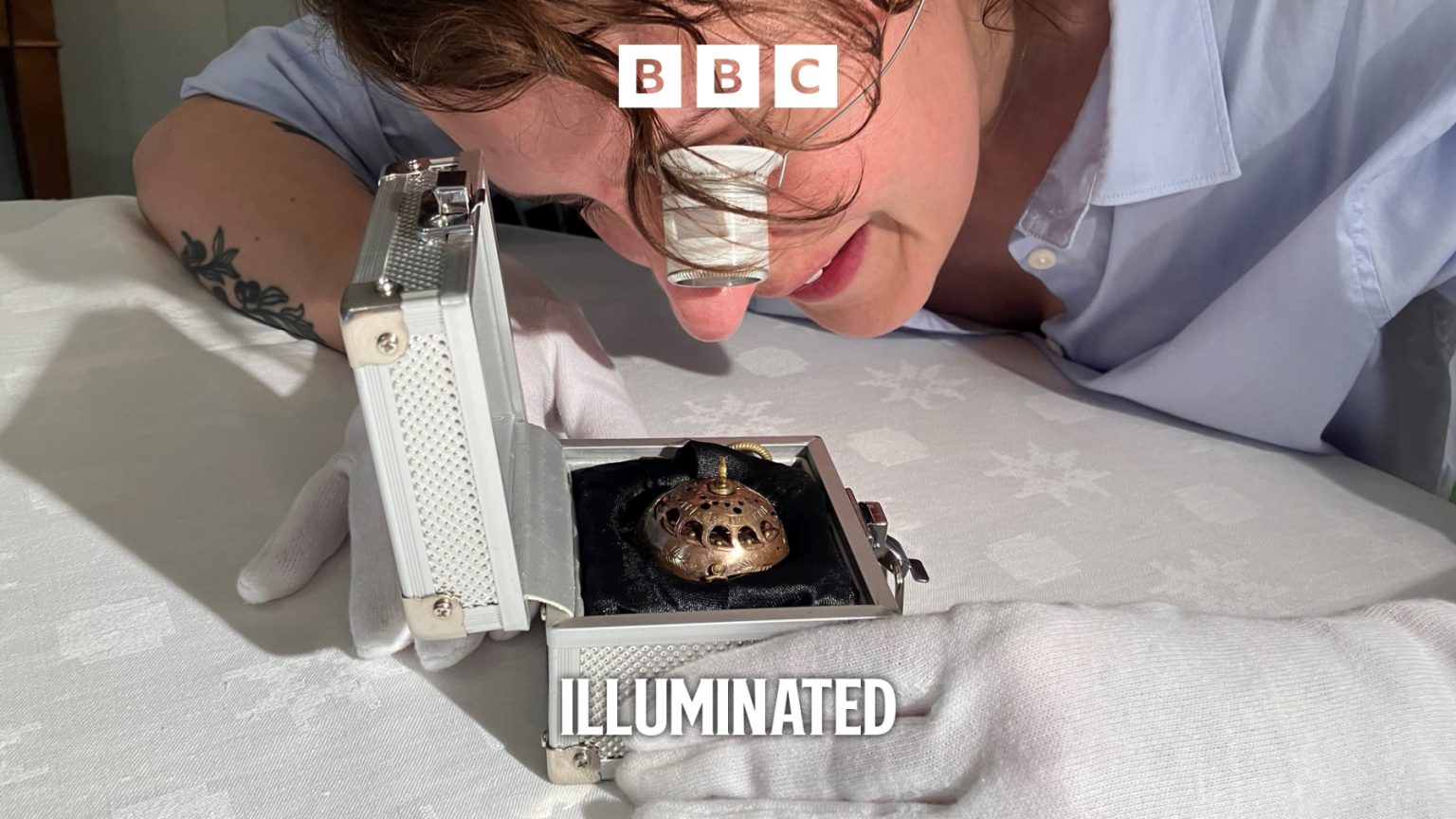
Is this the oldest watch in the world?
2 September 2025

If you missed BBC Radio 4’s intriguing The Watch Case with Rebecca Struthers, click here to listen…

https://www.bbc.co.uk/programmes/m002hpf0


A watchmaker, author and regular contributor to The Horological Journal, Rebecca writes…

‘Small objects are good at disappearing. They can be stolen, destroyed or misplaced. They can vanish into the bowels of private collections. They can hide in the backs of drawers, in shoeboxes under beds, and even under floorboards. But then, sometimes, they are discovered again by chance. So it was with the world’s oldest known watch, which was found in a box of old parts at a London flea market in 1987 for £10.’

When I wrote those words about the famous, or infamous, ‘1505’ watch in my book, Hand of Time, I had no idea what an incredible journey they would take me on. The legitimacy of what might be the oldest surviving watch in the world has been the subject of hot debate. What started out with me following the latest groundbreaking study into this watch took me on an unexpected rollercoaster of a detour…

I’m thrilled to be able to share that journey with you all on BBC Radio 4, as I invite you to join me for The Watch Case.

Latest Articles

29 October 2026

November 2026 Horological Journal

November’s Journal features on the covers a silver and gilt pre-balance spring verge pocket watch made for King James VI of Scotland, later James I of England, circa 1613. One of only three known to be in existence, it was created by David Ramsay, who became the first Master of the Worshipful Company of Clockmakers. Also in this […]

Find out more

30 September 2026

October 2026 Horological Journal

The covers of the October edition of the HJ feature an intriguing table clock co-signed by East and Fromanteel, although the origins of its engraved case are the subject of deeper research. It is thought to be the first English full grande sonnerie clock, and one of the earliest English clocks fitted with a minute hand. Also in this issue, David Poole […]

Find out more
✨ INTRODUCTION TO FINISHINGHave you ever looked closely at the finish on a watch or clock component and wondered how it's achieved?What’s the difference between a high polish and a straight-grained finish? And how do you preserve those crisp, traditional edges without rounding them off?Our Introduction to Finishing course at Upton Hall explores the techniques behind traditional horological finishing, with plenty of hands-on practice.Working with brass and steel, you’ll try different polishing methods and discover traditional techniques including silvering, bluing and lacquering.No previous experience is needed, making this a great opportunity to explore a new skill and learn more about the details that make each component special.🔧 Have you ever tried finishing a component yourself? Which technique would you most like to learn?Find out more about our courses: bhi.co.uk/courses#BHI #Horology #Watchmaking #Clockmaking #HorologicalFinishing #WatchRepair #ClockRepair #UptonHall #WatchCollectors ...
View on Facebook (opens in a new tab)
✏️ Ever wondered how to read or create a technical drawing?Technical drawing is an important part of horology, but where do you start?Our Introduction to Technical Drawing – Part 1 course at Upton Hall is a great place to begin.What do different line types tell us? How do you show a component from different angles? And what makes a technical drawing clear and accurate?You'll explore the fundamentals of layout, lettering, dimensioning, sectioning and orthographic projection, with plenty of opportunity to put your new knowledge into practice and learn alongside fellow students.No previous experience is needed – just an interest in learning something new!Have you tried technical drawing before, or is it a skill you'd like to develop?Find out more about our courses: bhi.co.uk/cou#bhi/#britishhorologicalinstitutel#TechnicalDrawingc#horology #watchmakinga#clockmakingl#watchrepaira#horologicalskillsi#learnhorologyr#UptonHall##distancelearningceLearning ...
View on Facebook (opens in a new tab)
Getting to grips with single train clocks ⏱️What does it take to get a single train clock running as it should?On our four-day Single Train Clock – Servicing and Correcting Faults course at Upton Hall, students gain hands-on experience identifying faults, understanding what’s gone wrong and putting things right.With plenty of practical workshop time, the course helps students develop their clock servicing skills and prepare for the DLC Level 3 Exam – Unit D3 (Single Train Clock).Have you worked on a single train movement? We'd love to hear about your experiences!Find out more about the course here: bhi.co.uk/courses#BHI #Clockmaking #Horology #ClockRepair #ClockServicing #MechanicalClocks #ClockRestoration #UptonHall #HorologicalTraining ...
View on Facebook (opens in a new tab)
To top